MT-BLC-SUB01
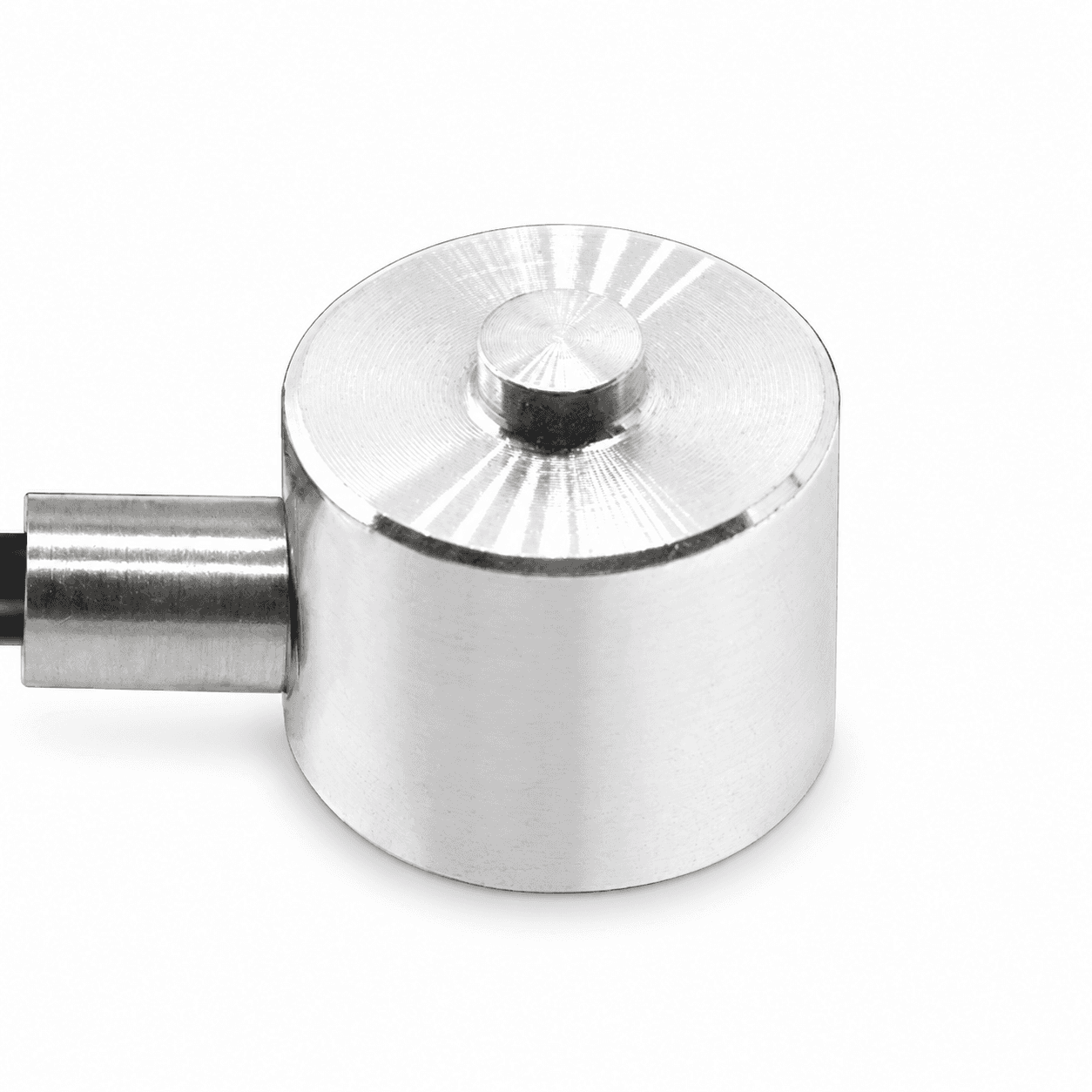
Subminiature load buttons
Robotics fingertips & miniature instruments
- Diameter
- Ø6 / Ø8 / Ø9.5 mm
- Capacity
- 1–250 N
Define the pad, the preload and the moving cable before choosing a tiny compression sensor. MT-BLC-SUB targets millimetre-scale force integration in robotic fingers.
Request a configuration review ↗| Outer diameter (OD) | Height (H) | Series / fit | Button radius | Capacity (N / kgf / lbf) |
|---|---|---|---|---|
| Ø6 / Ø8 / Ø9.5 mm | 2.8–4 mm | MT-BLC-SUB ↗Robotics fingertips & miniature instruments | Spherical; drawing-specific | 1 N / 0.102 kgf / 0.225 lbfto 250 N / 25.493 kgf / 56.202 lbf |
| Sensor selected separately | Module-specific | MT-AMP-KIT ↗Laboratory acquisition & PLC integration | Sensor-specific | Matched to selected sensor |
A compliant fingertip spreads contact over a pad; the button needs an axial resultant on its convex top. Use a guided pad or flexure to keep shear and torque out of the sensing element. A single compression channel measures the force along that axis.
A 1 N change and a 1 N full-scale sensor are different requirements. State the smallest force change, sample rate, filter delay and permitted noise with the motors operating. Compare the complete bridge and amplifier chain at that bandwidth.
First validate the assembled pad with known axial forces, then repeat with off-centre contact and through the expected temperature range. Freeze the approved pad and cable routing before ordering multi-finger quantities.
Robotics fingertips & miniature instruments
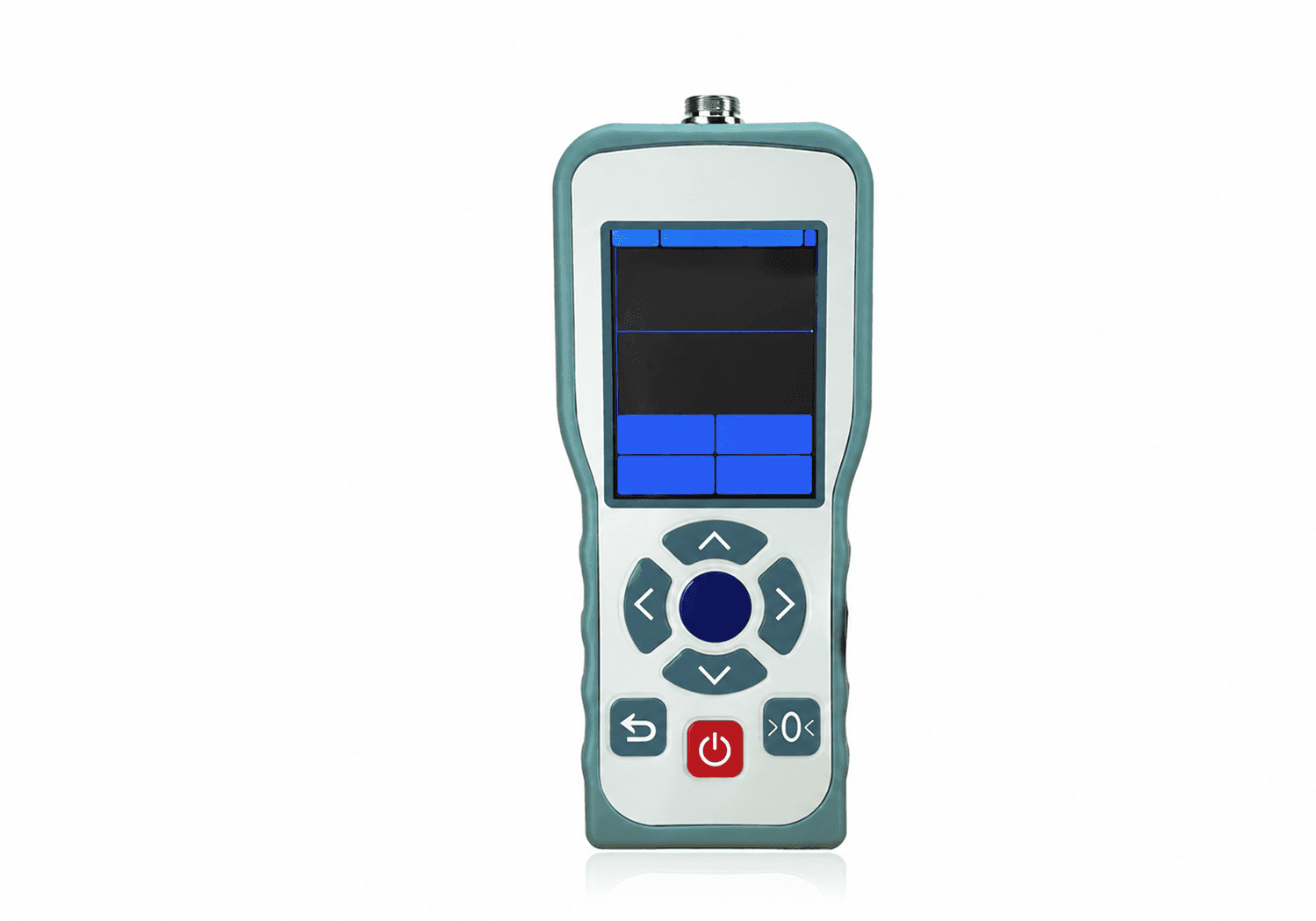
Laboratory acquisition & PLC integration
Need an application-specific answer?
Talk through your force path ↗
Include preload, normal compression peaks and credible overloads. Select a range that resolves the minimum force of interest while leaving mechanical margin, and add a fixture overload stop.
Kilograms describe mass. Use kgf when expressing force: 1 kgf = 9.80665 N. The tables show N, kgf and lbf together; dimensions and ratings remain model-specific.
Send the complete original model, drawing revision, capacity and electronics details. We review mechanical and electrical interfaces and agree a sample correlation test before compatibility is confirmed.
No. Cable, sensor body and amplifier ratings are separate. Request a +150°C or +200°C sensing configuration with the actual thermal conditions and agreed zero/span limits.
A bare mV/V bridge normally needs a compatible conditioner. Specify an MT-AMP-KIT with 0–10V, 4–20mA or an agreed RS485 interface, plus system calibration and force mapping.
Send OD × height, peak force and output. We’ll start with the fit.